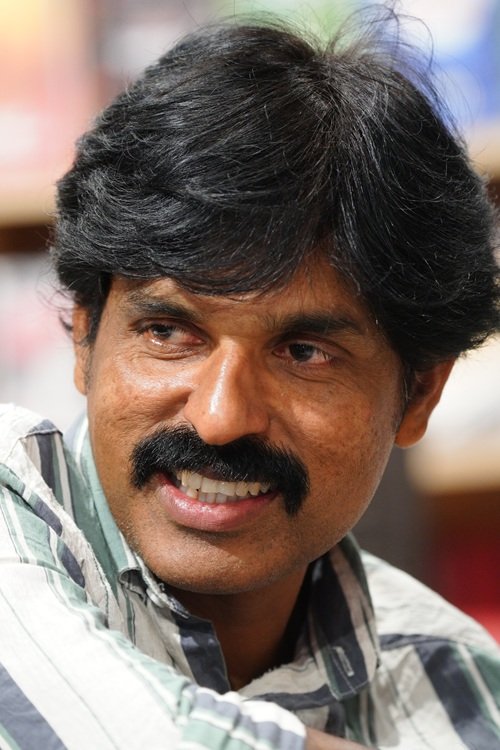
Majeed Syed is a Malayalam author whose literary world draws deeply from rural life, human relationships and the complexities of the human psyche. Hailing from Vaikom, Kottayam, he pursued his education at Thalayolaparambu Government Boys High School and Devaswom College. Alongside his literary pursuits, Syed is actively engaged in farming, an experience that has enriched his understanding of land, labour, community and rural realities.
His works include the short-story collection Penvathil, Akhila Loka Aadu Company, and the novels Chenpilammini Kolakes and Karu. His writing often explores desire, love, conflict, morality and the contradictions within human relationships. With a distinctive voice rooted in observation and lived experience, Majeed Syed brings together the textures of rural existence and the deeper questions of human life in contemporary Malayalam literature. His latest novel, Karu published by DC Books in 2025 has garnered recognition beyond Malayalam. For the proposed English translation of Karu, Akhil Jose has been Shortlisted for the highly prestigious PEN Presents × SALT Awards (A Joint Initiative of English PEN and South Asian Literature in Translation).
In an Exclusive Interview with Nitish Raj; Editor-in-Chief, the prominent author talks about his literary journey along with various aspects of writing.
Q.1 You have experienced both the literary world and the life of a farmer. How has working with soil, seasons, and cultivation influenced the way you observe people and construct stories?
MS: My life is about much more than just books and farming. I have lived through many unique and intense experiences.
When I was twenty, I left home to travel all over India. I spent time with many different types of people and shared their daily lives. I have slept on city streets, and I have slept in grand palaces. Seeing so many different sides of life became my biggest strength as a writer. Those travelling years taught me how to truly observe the world.
For the last ten years, I lived as a farmer. My farm was in a very quiet, lonely place surrounded by mountains and forests. I actually started writing during that time just to deal with being so alone.
Looking back, farming was very important for my writing career. Most of all, it taught me patience. Waiting for crops to grow takes a lot of time, and that experience made me a much more patient writer.
Q.2 Farming demands patience, uncertainty and an intimate relationship with nature. Do these qualities also influence your philosophy of writing and the way you approach a story?
MS: Farming has deeply influenced my writing career. Breaking into Malayalam literature is very difficult, and getting published in a respected magazine can take a long time. Editors might ignore a new writer’s work for months or even years. In fact, getting published often requires more patience than the writing itself.
The uncertainty of farming prepared me for this struggle. During my first year, nobody noticed my writing. Instead of giving up, I drew on the lessons I learned in the fields and patiently kept working.
Eventually, a small magazine published two of my stories. Then, at the start of my second year, Chandrika Weekly published my work, which changed everything. After that breakthrough, I received many opportunities and published fourteen stories in a single year. Readers began to notice my work, and I gradually found my place in the literary world.
Ultimately, farming taught me the most important lesson for my writing life: the patience to keep going even when you do not see immediate results.
Q.3 Karu has recently been Shortlisted for PEN × SALT Awards 2026. What does the idea of ‘Karu’ represent within the work, and what deeper questions did you seek to raise through it?
MS: First of all, I would like to thank Pen & Salt for shortlisting Karu.
The novel itself begins with these lines:
“Once you start killing for a woman, there is no end to it. Three-quarters of the murders in this world have been committed in the name of a woman.”
Rather than simply proclaiming an idea or making a statement, Karu attempts to explore how women, even as victims of patriarchy, have been made part of the making of human history.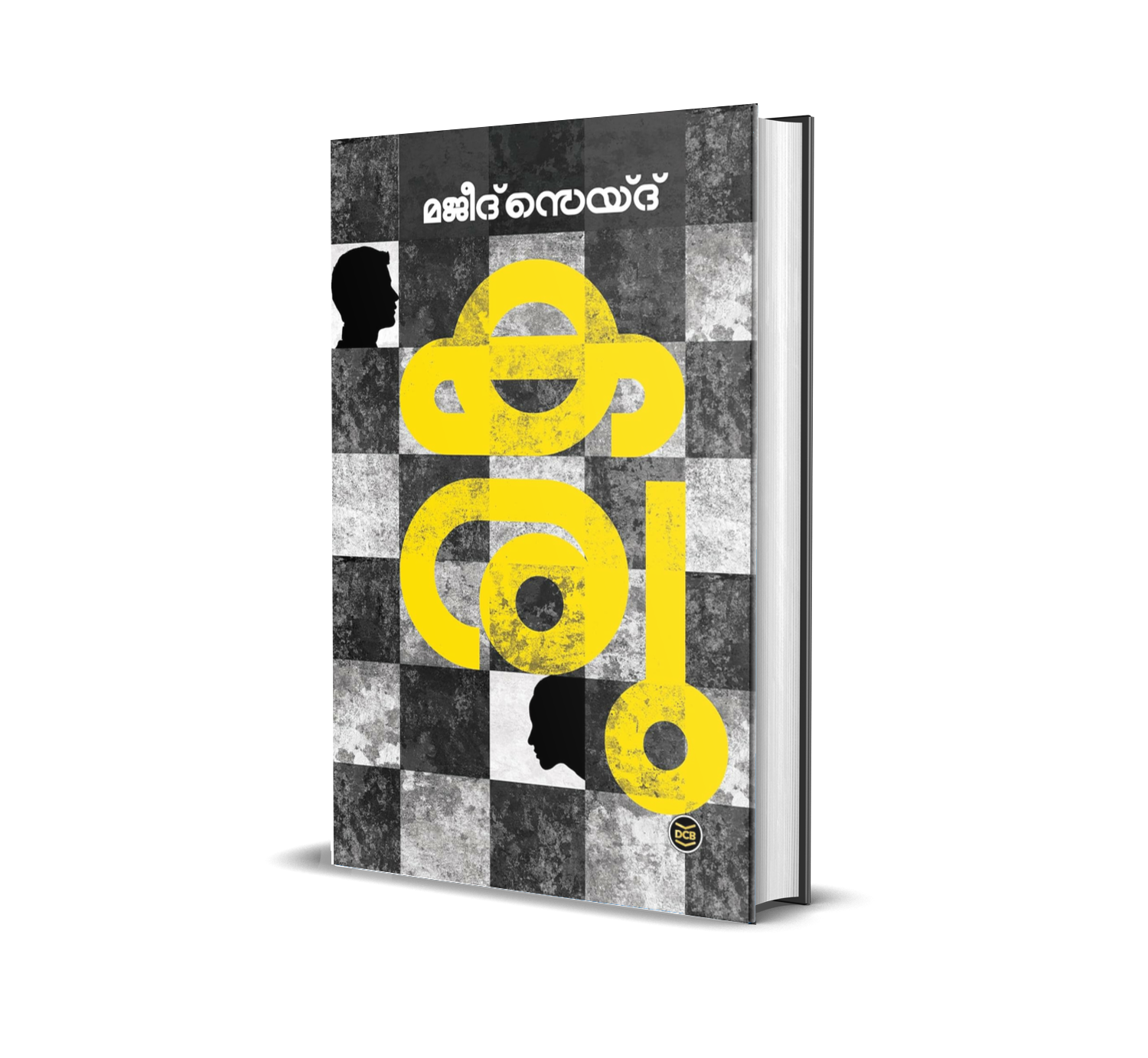
Men do not merely live out their lives believing that the world belongs to them. They have always had to establish and reaffirm that ownership. And, in doing so, they have often offered the blood, flesh and soul of women as sacrifices to the world. They drink and celebrate, as though wine were the tears and sweat of women. They listen to the pain of women as though it were the music of their own desire.
Gods, governments, nation-building, systems of family, even love—all of these, in one way or another, have been built upon the restrictions imposed on women and the denial of their freedom.
The very title Karu suggests the condition of being made a victim—of being sacrificed, used, or reduced to something upon which others build their worlds.
As a writer, I long for a world in which women are completely free. But freedom is not something that can simply be given; it has to be fought for and reclaimed.
Karu tells the stories of nine Indian women who have fought to claim their lives. They come from different parts of India—Kerala, Tamil Nadu, Karnataka, Maharashtra and elsewhere. Some are urban women, some come from villages, and others from the forests. Their lives, circumstances and struggles are vastly different, yet they are all engaged in the same fundamental act: fighting to become the authors of their own lives.
I am not the one raising the questions in Karu. They are.
I have only used the novel as a medium through which their questions can be heard.
Q.4 Language is not merely a medium but also a carrier of memory, culture and identity. How consciously do you engage with these dimensions while writing in Malayalam?
MS: That is true. Language is not merely a medium of expression; it is also a vessel that carries and preserves memory, experience, and culture. Much of what we are able to experience today, and even the new ways of thinking we are capable of imagining, are possible because language has preserved so much of what came before us.
I believe that anyone who writes in any language must approach it with a certain awareness and responsibility. Language is not something we simply inherit and use; in some sense, we also become its custodians. If we use it carelessly, we may, perhaps without even realizing it, contribute to the erosion of an entire culture. But if we approach it consciously, we can also add new layers to an existing culture and allow it to evolve.
That awareness is at the heart of the way I use my language. I do not see language merely as a tool for telling stories. I see it as something that carries the memory of a people—and, through writing, I believe we also have a responsibility to leave something behind for those who come after us.
Q.5: How do you distinguish between writing that merely reflects society and writing that interrogates society? Where does your own work locate itself between the two?
MS: There is a significant difference between the two.
I don’t believe an author’s responsibility is merely to reflect society. Ultimately, writing should resemble a courtroom without a judge. Both the accused and the accuser must be present. Questions should arise, and counter-questions should follow. The role of the judge, however, must be left to the reader.
At the same time, I believe both reflection and interrogation should exist in equal measure within a work of writing. My own writing locates itself in the space where both these elements coexist—it reflects society, but it also questions and interrogates it.
Q.6: Contemporary readers encounter literature in an increasingly digital and fragmented cultural environment. Do you think this is changing the way writers construct stories and readers interpret them?
MS: There have always been changes in both the making of literature and the ways in which it is interpreted. Our time is no different; it too has brought about its own changes. However, I believe the more significant shift has taken place in the realm of interpretation. New readers are bringing more thoughtful, intelligent, and concise interpretations to literature.
Q.7 Chenpilammini Kolakes uses the framework of a case or investigation. What interested you about this form, particularly in relation to truth, memory and perception?
MS: The novel Chenpilammini Kolakes is not really investigating a crime. It is investigating a place.
The novel portrays the unrefined lives of a group of people who lived in the hilly villages of Kerala during the 1970s and 1980s. It is also the story of a love that remained hidden among them, kept secret from the world. The story begins with the appearance of a corpse. For the first time, a police dog enters the village, and an entire crowd follows behind it. As they run, the novel gradually investigates the complete stories of that community, with the texture and momentum of a crime investigation.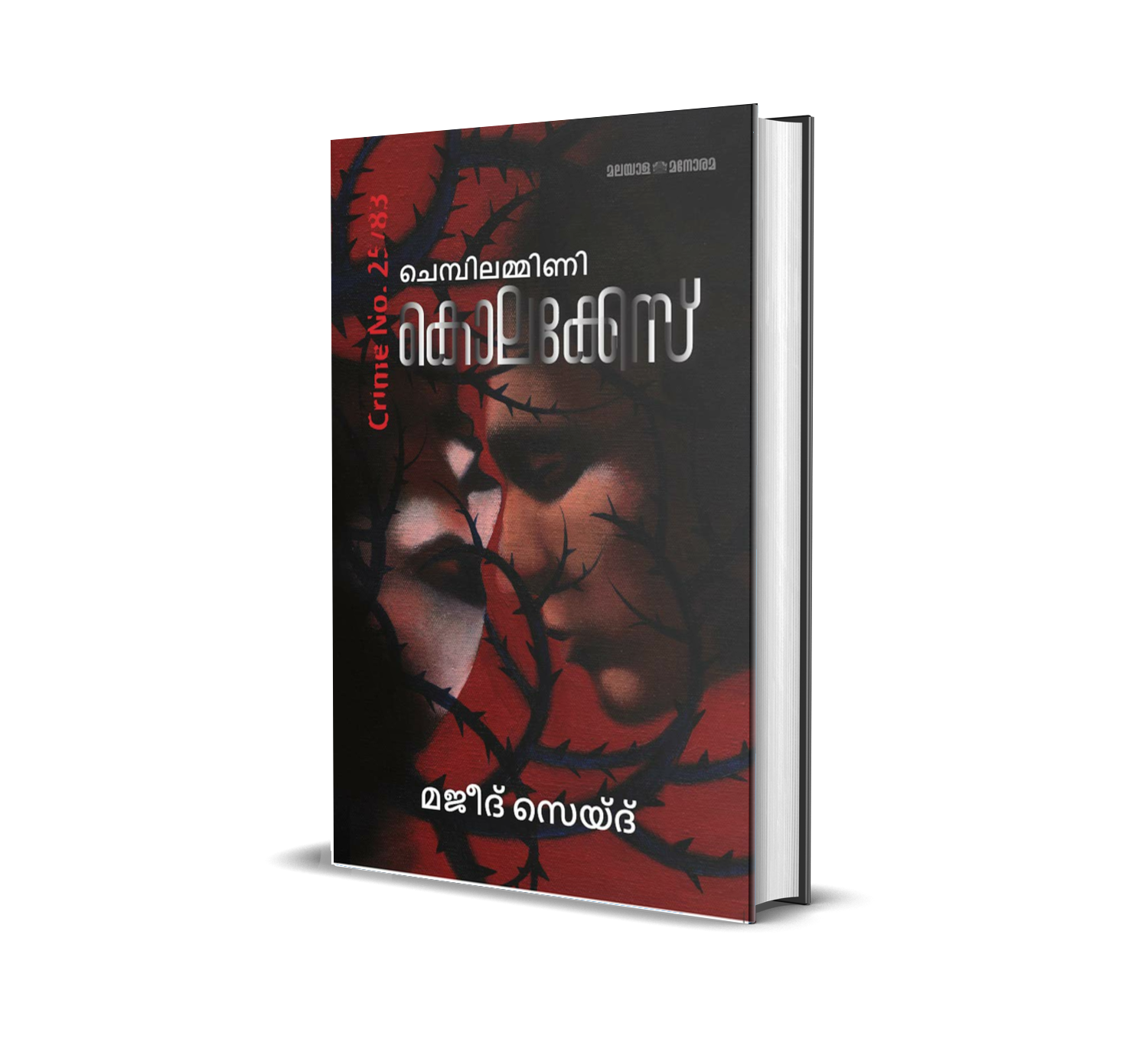
The novel was born from the thought that a murder would be the simplest device through which to explore, with a touch of dark humour, the futile journey of human existence.
Q.8 Your life between Kerala, Karnataka, writing and farming offers an unusual creative perspective. How have landscape, livelihood and distance from literary centres influenced your fiction?
MS: What is relevant here is not the physical distance from literary centres. Distance, or the place where a writer lives, should never be a criterion for judging a writer.
In Kerala, however, when it comes to being accepted as a fiction writer, there are many qualifications that are implicitly prescribed. I am not referring to readers here. Readers tend to trust and encourage a writer based primarily on the value of the work itself.
But gaining the acceptance of critics and others within the literary establishment can involve crossing many hurdles. An academic background is an important one. So is the kind of work a person does. The more prestigious the profession, the easier it seems to be for a writer to become acceptable within those circles.
Kerala’s literary sphere has considerable scope for networks of exchange and mutual accommodation. In such a context, farming is often regarded as one of the lowest-status occupations. I have experienced the rejection and exclusion that can come with that perception, even as a writer.
Yet, despite all of this, I was able to find a place in the mainstream largely because of the support of sincere and discerning readers.
Q.9 Many literary works derive their strength from ambiguity rather than definitive answers. Do you see uncertainty as an essential element of serious fiction?
MS: Absolutely, I believe so. Literature is not a realm in which only the writer should participate. The reader must engage with it even more deeply than the writer does. For that engagement to happen, something must necessarily remain incomplete.
Because what is complete possesses only a single beauty of its own. But what remains incomplete has the power to generate a thousand different beauties.
Q.10 Looking across your body of work, what is the central question that continues to return to you as a writer—perhaps even when you are not consciously trying to address it?
MS: Women’s rights are a very important issue to me, and it is a theme you will see again and again in all of my stories. I always want my writing to focus on the experiences, struggles, and voices of women.
To finish, I want to share a thought from my work, Karu, which explains how I see the world:
“The biggest lie humans have ever invented is the word solution. In reality, there are no magical fixes. Once an action is taken or something happens, you can never truly undo it or erase it as if it never occurred. If it were actually possible to just easily fix our past mistakes and wipe them away completely, the world would already be a perfectly peaceful place.”