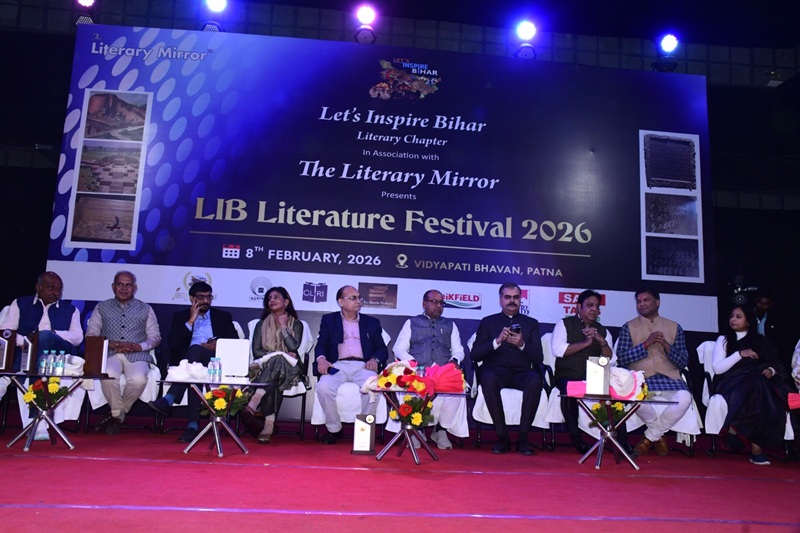
The LIB Literature Festival 2026, held on 8th February at the historic Vidyapati Bhawan in Patna, emerged as a vibrant celebration of literature, dialogue, and cultural continuity. As literary festivals across India grow larger, the LIB Literature Festival has built a distinct identity rooted in regional consciousness, intellectual seriousness, and inclusive representation.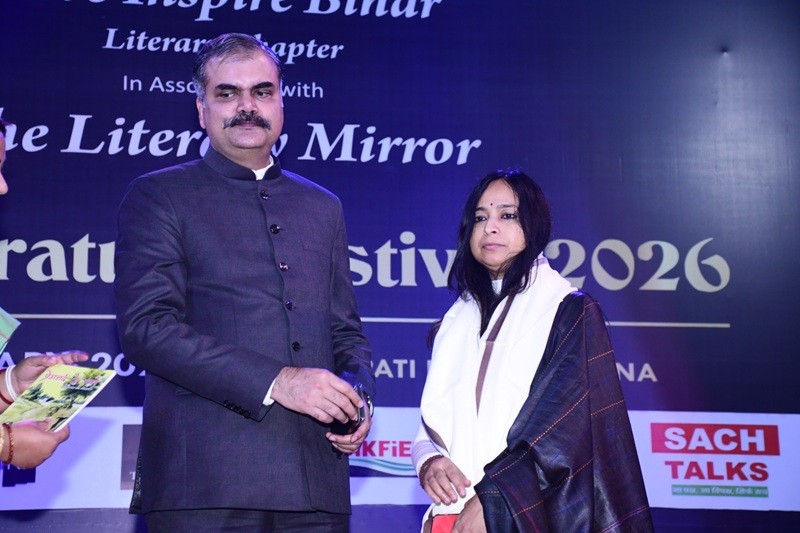
Patna, with its layered history of scholarship and resistance, offered an apt setting. Bihar’s intellectual lineage stretches from the ancient seat of Nalanda to modern Hindi and regional literary movements that have shaped India’s cultural imagination. In this context, LIB Literature Festival isn't just an annual event; it's an extension of that legacy—a platform where tradition and contemporary thought come together.
A Festival with Purpose and Perspective
Unlike metropolitan literary gatherings that often highlight celebrity authors and international bestsellers, LIB Literature Festival places meaningful emphasis on regional voices, emerging writers, and socially engaged discourse. Hindi literature finds equal footing alongside Urdu, Maithili, Bhojpuri, and other linguistic traditions that form the cultural tapestry of Bihar and North India.
The inaugural edition brought together poets, novelists, academicians, critics, translators, administrators, and cultural thinkers under one roof. The thematic range reflected pressing contemporary concerns: literature as resistance, women’s voices in narrative traditions, translation as a bridge between cultures, and the role of youth in redefining literary expression. Through these conversations, LIB Literature Festival positioned itself not just as a festival of books but as a forum of ideas.
Leadership, Vision, and Institutional Support
Organized by the Let’s Inspire Bihar Literary Chapter in association with The Literary Mirror, the festival unfolded as a dynamic confluence of administrative vision and literary commitment. It was held under the patronage of IPS officer Vikas Vaibhav and guided by Jyoti Jha, Chief Coordinator of the LIB Literary Chapter, whose leadership ensured thoughtful curation and inclusive participation.
The event gained further distinction with the presence of Shri Arun Shankar Prasad, Hon’ble Minister for Art, Culture and Tourism, Government of Bihar, as Chief Guest. His participation underscored the growing institutional recognition of literature as an essential component of cultural development. The convergence of governance and creativity signaled a promising direction for Bihar’s cultural initiatives.
The ceremonial lamp lighting and Saraswati Vandana set a tone of reverence and continuity. The formal inauguration was followed by a compelling keynote session delivered by Amit Lodha, Additional Director General, Crime Record Bureau (Bihar). Speaking on “Literature as a Tool for Social Change: The Bihari Context,” Mr. Lodha reflected on how narratives shape public consciousness and civic responsibility. Moderated by Mrityunjay Sharma, author of Broken Promises, the session resonated strongly with the audience. A book signing of Amit Lodha’s bestselling works added a personal dimension to the interaction.
Dialogues that Matter
One of the most engaging sessions of the festival was the panel discussion on “Literature as Resistance and Women’s Voices in Literature.” The panel featured Rachana Yadav (Managing Director, Hans Magazine), Prof. Mangala Rani (President, Hindi Department, Patliputra University), Dr. Sweta Sinha (Associate Professor, IIT Patna), Parmendra Vajpayee (Vice-Chancellor, J.P. University, Chapra), and Mrityunjay Sharma. Moderated by Nitish Raj, Editor-in-Chief of The Literary Mirror, the discussion explored how women’s writing challenges entrenched social narratives and reclaims interpretive authority.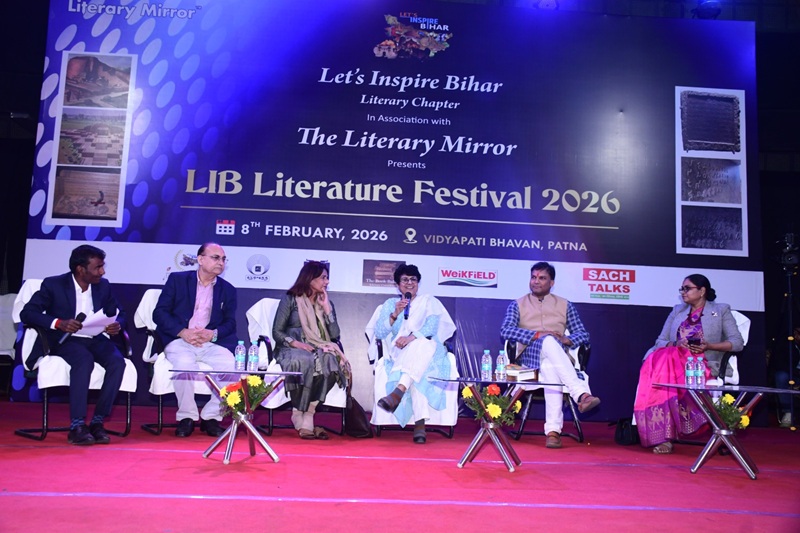
The conversation moved beyond symbolic representation. Panelists addressed structural inequalities in publishing, the negotiation between private experience and public articulation, and the emergence of feminist reinterpretations of mythology and history. The session affirmed that literature, particularly women’s writing, remains a powerful site of resistance and renewal.
Subsequent panels widened the intellectual canvas. Distinguished speakers including Dr. Anantashutosh Dwivedi, Alka Priya, Wing Commander (Retd.) Umendra Kumar Tripathi, Dr. Anil Sulabh, Dr. Parshuram Tiwari, Dr. Dharmendra Kumar Dheer, Prabhakar Kumar Rai, Radha Shailendra, and Avinash Bandhu engaged audiences in discussions ranging from cultural heritage and poetic traditions to contemporary social responsibility. The diversity of perspectives ensured that the festival reflected literature’s multifaceted nature.
Poetry: The Pulse of the Festival
Poetry retained its central place at the LIB Literature Festival 2026. The ‘Kavya Sandhya’ sessions drew enthusiastic audiences who responded with applause, laughter, and contemplative silence. Verses ranged from satire and romance to spiritual reflection and social critique. In Patna, where oral traditions remain vibrant, these live readings carried a special immediacy.
A highlight of the poetic segment was the captivating recital by Samir Parimal, Deputy Commissioner, State Tax, who attended as Guest of Honour. His presence and performance reinforced the festival’s ethos: literature belongs not only to professional writers but to all who engage thoughtfully with language.
Importantly, the poetry sessions embraced both classical structures and contemporary spoken-word experimentation, signaling literature’s adaptability in changing times.
Celebrating New Books
No literary festival is complete without the celebration of new publications. LIB Literature Festival 2026 witnessed the launch of three significant titles. Spectrum and Beyond by Jyoti Jha offered an empathetic exploration of neurodiversity, moving beyond stereotypes to foster understanding. Chitchor by Pallavi Rani, delicately captures emotional nuances and the complexities of human relationships. Apne Hisse ka Khwab by Avinash Bandhu reflected on aspirations and resilience within lived realities.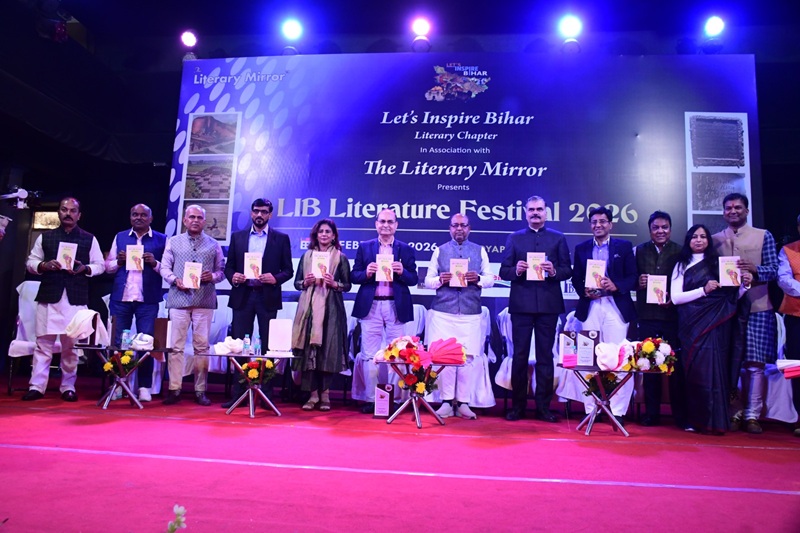
The book launch segment became a moment of shared pride and excitement. Authors spoke about their creative journeys, inspirations, and challenges, reinforcing the festival’s commitment to nurturing contemporary voices.
Youth and the Future of Literature
Another striking feature of the festival was the active presence of students and young readers. Interactive exchanges addressed practical concerns: navigating rejection, maintaining creative discipline, leveraging digital platforms, and balancing regional language writing with English publishing markets. Established authors demystified the writing process, offering candid insights into persistence and integrity.
By foregrounding youth engagement, LIB underscored literature as an accessible and evolving vocation rather than an elite pursuit.
Translation and Cultural Continuity
Translation emerged as a recurring theme throughout the festival. In a multilingual nation like India, translation is both a necessity and an art. Speakers emphasised that translating literature is not a mechanical act of substitution but a sensitive re-creation of cultural context. Through translation, regional narratives travel across linguistic borders, enriching national discourse while preserving nuance.
These discussions reaffirmed the importance of sustaining linguistic diversity as a cornerstone of cultural vitality.
Beyond Panels: The Atmosphere of Exchange
What distinguished the LIB Literature Festival was its atmosphere. Vidyapati Bhawan buzzed with informal conversations, spontaneous debates over tea, and serendipitous encounters between readers and writers. Book stalls displayed a wide spectrum of titles, encouraging browsing and dialogue.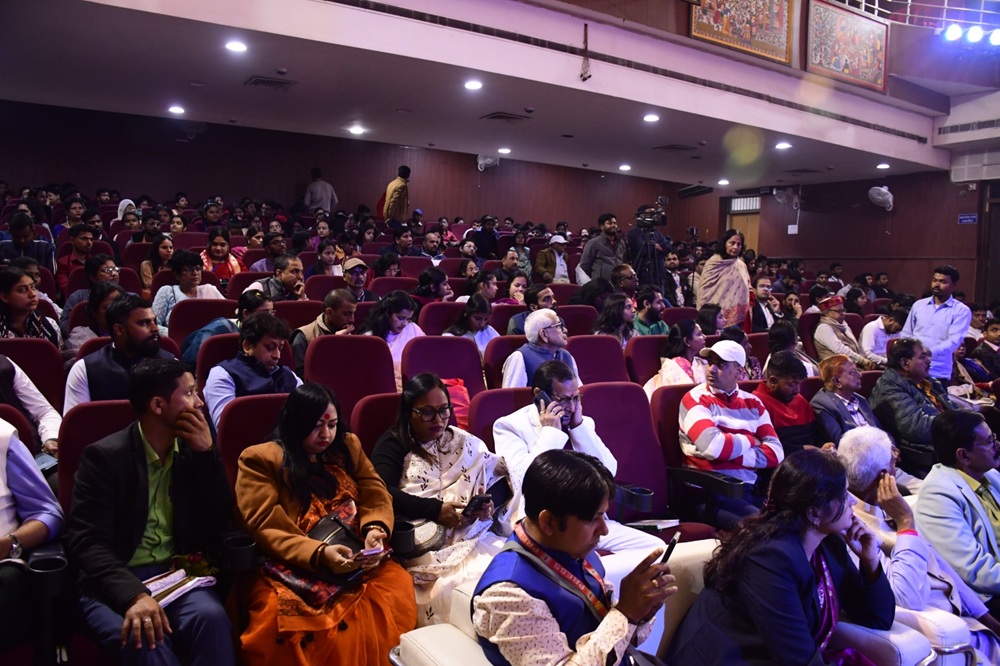
The festival’s accessibility—intellectually and geographically—ensured inclusivity. Sessions encouraged participation rather than passive listening, making literature feel immediate and communal.
Strengthening Bihar’s Literary Landscape
In a cultural landscape often dominated by metropolitan centres, regional festivals like LIB play a crucial role in decentralizing literary culture. By spotlighting local talent, supporting regional publishing initiatives, and fostering academic collaboration, LIB strengthens Bihar’s literary ecosystem.
The festival sends a powerful message: literary excellence thrives beyond metropolitan boundaries. In revitalising Patna’s intellectual profile, the LIB Literature Festival contributes meaningfully to India’s broader cultural conversation.
A Living Legacy
The LIB Literature Festival 2026 was more than a calendar event—it was a reaffirmation of literature’s relevance in contemporary society. By uniting established voices and emerging talents, foregrounding women’s narratives, encouraging youth participation, and honouring regional languages, the festival created a space where literature felt urgent and alive.
As applause echoed through Vidyapati Bhawan, so did ideas—ideas that will ripple into classrooms, homes, and future manuscripts.
As the pages turn toward future editions, one truth remains evident: the spirit of literature in Bihar is not merely enduring—it is flourishing.